

Ed started his career in chemistry, working for ICI Organics Division in Blackley. Having decided that 21 days holiday a year was simply not enough, he left industry to take up teaching at the age of 30. He spent the next twenty odd years teaching chemistry to GCSE and A level - and learning about behaviour management the hard way. Early in his teaching career he became interested in classroom management techniques following some Keystone Kops style episodes in his Y9 lessons. For the last few years of his teaching career Ed was the behaviour lead in a large Manchester comprehensive and was responsible for the successful introduction of BFL into the school. In July 2008 Ed left teaching to form Schools Data Services Ltd, specifically to promote IRIS, an on-line behaviour and rewards management facility devised by Ed and ex school MIS manager Andrew Rose.
Ed lives in Rochdale with wife Helen, two boys and a dog of very small brain called Archie. His main ambition is to make a difference in education by providing an alternative low cost, high value MIS to schools.
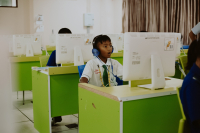
 The rise in the popularity of BYOD in schools raises a number of data security issues for school leaders to consider.
What is BYOD? There has been a huge rise in the popularity of hand-held and tablet devices in the last few years, and some schools may allow staff to use their own personal devices to access school systems. This is commonly known as Bring Your Own Device, or BYOD, and there are advantages in allowing staff to provide their own IT equipment. However, the use of personal devices to access school systems raises a number of questions regarding the school management’s duty under the Data Protection Act (DPA). This is particularly so if the device is used to access the school MIS (e.g SIMS) or to hold any kind of staff or pupil information. It is important to remember that the school, as data controller, is still responsible for the security of the information; regardless of the ownership of the device used to access or process the data.
The risks - that BYOD device is owned and maintained by the user. This means that the school has little or no control over how, where or when it is used.

Effective and positive behaviour management is achievable through the combination of a well-designed, robust IT system and properly supported teachers following a clear and fair behaviour policy. Sounds like a simple strategy, but putting a software system in place that enables a school to record, monitor, analyse and manage pupil behaviour can be problematic.
Teaching, learning and behaviour are inseparable issues in school: without good order in the classroom, effective teaching cannot take place and pupils’ learning is inhibited. Even low-level disruption in the classroom is a significant source of stress for teachers. Poor behaviour, whatever its severity, impacts on every aspect of school life, from exam results to teacher and pupil wellbeing. As a result, managing pupil behaviour effectively is at the centre of a school’s core business.
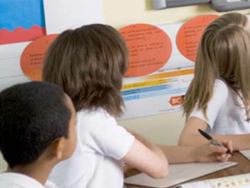
When I used to provide sessions on classroom management to our regular cohorts of trainee teachers, one thing I noted was how poorly they prepared themselves to deal with misbehaviour. Though they all planned their lesson content - their starter activity, plenary and so on - virtually none had a plan for how he would respond to bad behaviour.
Yet misbehaviour in lessons is almost certain. If you enter a classroom without a clear idea of how to respond to it, you will have to make things up on the spot.
This is generally not a good idea. For one thing, a punishment contrived and applied on the spur of the moment can be as much of an inconvenience to you as to the miscreant. “Right, you can spend your lunchtime with me!” Oh dear, that’s your well-earned lunch break spent in a classroom with a warm sandwich and sulky teenager.

In my previous article I discussed ways of minimising misbehaviour and creating a positive classroom climate. But, like an English summer, even the most temperate lesson is prone to showers. The following tips are designed to help you prevent a drizzle of mischief becoming a deluge of disobedience.
Keep the lesson flowing. When dealing with misbehaviour, always start off with the least intrusive intervention possible. For example, a pupil is tapping a pencil whilst you are talking. He might be doing it absent- mindedly, or he might be trying to provoke a reaction. In either case, try ignoring it. (This is called “tactical ignoring”: you are making a positive choice to ignore the behaviour, not failing to act because you are unsure of what to do.) If the tapping doesn’t stop, point your gaze at the source of the noise or move towards it. That will usually be enough to get it to stop. Other low-level intervention techniques include asking a relevant question (which is often all that is needed to bring the pupil back on task), and using non-verbal signals - such as a finger to the lips or even just a raised eyebrow. These enable you to maintain the flow of your lesson and not distract other pupils while ensuring that the class knows you’re monitoring its behaviour. Responding too quickly or too aggressively to minor misdemeanours can leave pupils feeling aggrieved or humiliated – and faced with a choice between defying the teacher and losing face in front of peers, many will defy the teacher. The issue then escalates, the disruption is drawn out, and the lesson flow is interrupted.
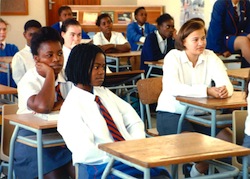
Everyone knows the old adage “prevention is better than cure”. This is as true of classroom management as it is of anything else. Preventing disruption from occurring in the first place is far better than struggling to regain control when things have all gone pear-shaped.
As staff mentor, I was once asked by a newly-qualified teacher if he could come and observe one of my lessons. He wanted, he said, to see “How you deal with confrontation”. I told him he was welcome to come and see my lesson, but he was unlikely to see any confrontation because I tried hard to make sure it didn’t happen. Of course, the question he should have asked is “How do I avoid confrontation in the first place?”.
 Driving efficiencies to provide real cost savings will be top of every secondary school Headteacher’s agenda in 2011. Managing and monitoring pupil behaviour is often administration heavy causing it to be a common time thief for both teachers and non-pastoral staff. An effective way of easing this burden is to implement a well-designed robust IT system that can record, monitor, analyse and manage pupil behaviour.
As teaching, learning and behaviour are inseparable issues in school, managing pupil behaviour efficiently is a core consideration for Headteachers. Without good order in the classroom, effective teaching cannot take place and pupils’ learning is inhibited. Even low-level disruption in the classroom is a significant source of stress for teachers. Poor behaviour, whatever the severity, impacts on every aspect of school life; from exam results to teacher and pupil wellbeing.
 Effective and positive behaviour management is achievable in every UK secondary school, through the combination of a well-designed robust IT system and properly supported and trained teachers. Sounds like a simple strategy, but putting a software system in place that enables a school to record, monitor, analyse and manage pupil behaviour effectively can be problematic. This article discusses some of the key considerations when procuring and implementing an effective behaviour management IT system.
Teaching, learning and behaviour are inseparable issues in school. Without good order in the classroom, effective teaching cannot take place and pupils’ learning is inhibited. Even low-level disruption in the classroom is a significant source of stress for teachers. Poor behaviour, whatever the severity, impacts on every aspect of school life; from exam results to teacher and pupil wellbeing. As a result, managing pupil behaviour effectively is at the centre of a school’s core business.

Are some schools confusing behaviour modification with punishment? Many schools use the system of ‘on report’ for managing individual pupil’s behaviour. This can take several forms, but the most usual is a card or sheet with the day’s lessons in a grid and a space for the teacher to make a comment or mark a grade and sign. Often there will be some sort of target set for the day or week. Most schools will have several types of report, usually at increasing levels of staff seniority: Form Tutor Report, Head of Year Report, SLT or Head Teacher Report, for example. On report can be a very useful tool in modifying pupil behaviour, but I wonder to what extent some staff in schools just miss the point?
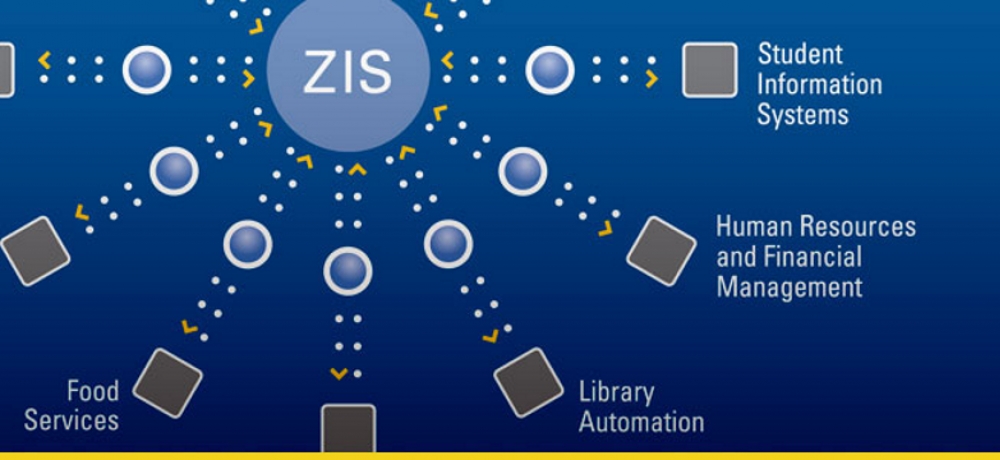
The recently released Interoperability Review from Education, Skills and Children’s Services appears to pour a considerable quantity of cold water on the idea of adopting the US based Schools Interoperability Framework (SIF). The report declares that there is a compelling case for a national interoperability capability, but goes on to suggest that SIF probably isn’t it. The report outlines several issues with SIF and suggests that unless these can be effectively resolved then SIF is unlikely to be able to provide an effective solution for current UK interoperability needs.

I was watching David Cameron doing a public Q+A session on TV a week or so ago. In response to a question from a teacher he began to explain where the Conservatives stand on education and, in particular, how they will ‘Restore Order and Discipline in the Classroom’.

Tom Stoppard has recently spoken of his fear for the future of the printed page. In this age of digital media, does the old fashioned medium of dead trees have a future?








1,300+ guest writers.
2,500+ ideas & stories.
Share yours.

A community-driven platform for showcasing the latest innovations and voices in schools
Pioneer House
North Road
Ellesmere Port
CH65 1AD
United Kingdom